Category Archives: Science

On artificial brains, part 2

It appears that FaceBook’s AI Directory agrees with me on the implausibility of trying “to copy every detail that we know of about how neurons and synapses work, and then turn on a gigantic simulation of a large neural network inside a supercomputer, and hope that AI will emerge.”

“I’m going to get a lot of heat for this, but basically a big chunk of the Human Brain Project in Europe is based on the idea that we should build chips that reproduce the functioning of neurons as closely as possible, and then use them to build a gigantic computer, and somehow when we turn it on with some learning rule, AI will emerge. I think it’s nuts.

Now, what I just said is a caricature of the Human Brain Project, to be sure. And I don’t want to include in my criticism everyone who is involved in the project. A lot of participants are involved simply because it’s a very good source of funding that they can’t afford to pass up.”

Quotes from Yann LeCunn in Facebook’s AI Director on His Quest to Make Machines Smarter With Deep Learning in IEEE Spectrum.

Implicit somewhere in the assumption of AI spontaneously emerging from a big enough neural net is the idea that it must have happened that way in nature since evolution is presumed to be true.

Courtesy of the scientific thought police

If science is our attempt to understand nature, why do we see so much suppression of dissenting viewpoints?  Shouldn’t ideas be evaluated with an open mind, and shouldn’t they rise or fall on their merits, whether or not they are politically and ideologically conforming?

The following was stolen borrowed from and Evolution News and Views article.  Similar lists could be made concerning climate change and other topics:

  • In 2005, Smithsonian spokesman Randall Kremer objected to a private screening of the pro-ID film The Privileged Planet because it drew a “philosophical conclusion.” The Smithsonian made no complaints when Sagan’s original Cosmos in 1980 argued that “The cosmos is all that is, or ever was, or ever will be.”
  • A congressional subcommittee staff investigation found that biologist Richard Sternberg experienced retaliation by his co-workers and superiors at the Smithsonian, including transfer to a hostile supervisor, removal of his name placard from his door, deprivation of workspace, subjection to work requirements not imposed on others, restriction of specimen access, and loss of his keys, because he allowed a pro-ID article to be published in a biology journal. The Congressional staff investigation concluded that the “Smithsonian’s top officials permit[ed] the demotion and harassment of [a] scientist skeptical of Darwinian evolution” and “officials explicitly acknowledged in emails their intent to pressure Sternberg to resign because of his role in the publication of the [pro-ID] Meyer paper and his views on evolution.”
  • In 2009 the state-funded California Science Center (CSC) museum cancelled the contract of a pro-ID group, American Freedom Alliance (AFA), to show a pro-ID film. The lawsuit was settled in August 2011, with the CSC agreeing to pay AFA $110,000 to avoid a public trial. However, documents disclosed during the course of litigation showed that employees of the CSC, the Smithsonian Institution, and the Natural History Museum of Los Angeles County, joined with other LA-area academics to suppress the expression of ID, most egregiously by pressing CSC decision-makers to hastily cancel AFA’s event.
  • In 2005, over 120 faculty members at Iowa State University (ISU) signed a petition denouncing ID and calling on “all faculty members to … reject efforts to portray Intelligent Design as science.” These efforts were significant not just because they opposed academic freedom by demanding conformity among faculty to reject ID, but because they focused on creating a hostile environment for pro-ID astronomer Guillermo Gonzalez, co-author of The Privileged Planet, who was denied tenure at ISU in 2006 due to his support for ID. Both public and private statements exposed through public records requests revealed that members of ISU’s department in physics and astronomy voted against Gonzalez’s tenure due to his support for ID.
  • In 1993, San Francisco State University biology professor Dean Kenyon was forced to stop teaching introductory biology because he was informing students that scientists had doubts about materialist theories of the origin of life.
  • In a similar case five years later, Minnesota high school teacher Rodney LeVake was removed from teaching biology after expressing skepticism about Darwin’s theory. LeVake, who holds a master’s degree in biology, agreed to teach evolution as required in the district’s curriculum, but said he wanted to “accompany that treatment of evolution with an honest look at the difficulties and inconsistencies of the theory.”
  • Rogert DeHart, a public high school biology teacher in Washington State, was denied the right to have his students read articles from mainstream science publications that made scientific criticisms of certain pieces of evidence typically offered to support Darwinian theory. One of the forbidden articles was written by noted evolutionist Stephen Jay Gould. Although DeHart complied with this ban, he was later removed from teaching biology.
  • In Mississippi, chemistry professor Nancy Bryson was asked by Mississippi University for Women to resign as head of the Division of Science and Mathematics after she gave a lecture to honors students called “Critical Thinking on Evolution.” She remarked, “Students at my college got the message very clearly[;] do not ask any questions about Darwinism.”
  • In 1999, ID theorist William Dembski founded the Polanyi Center at Baylor University to allow scientists and scholars to conduct scientific research into intelligent design. The Center was later shut down largely due to intolerance of ID among Baylor faculty.
  • In 2005, the president of the University of Idaho instituted a campus-wide classroom speech-code, where “evolution” was “the only curriculum that is appropriate” for science classes. This was done in retaliation towards a professor at the university, Scott Minnich, who at the time was testifying in favor of intelligent design as an expert witness at the Kitzmiller v. Dover trial.
  • Also in 2005, Cornell’s former interim president Hunter Rawlings devoted a State of the University Address “to denounce ‘intelligent design,’ arguing that it has no place in science classrooms and calling on faculty members in a range of disciplines” to similarly attack ID.
  • In 2005, top biology professors at Ohio State University derailed a doctoral student’s thesis defense by writing a letter claiming “there are no valid scientific data challenging macroevolution” and therefore the student’s teaching about problems with neo-Darwinism was “unethical” and “deliberate miseducation.”
  • In 2005, pro-ID adjunct biology professor Caroline Crocker lost her job at George Mason University after teaching students about both the evidence for and against evolution in the classroom, and mentioning ID as a possible alternative to Darwinism. While her former employer maintains that it simply chose not to renew her contract, she was specifically told she would be “disciplined” for teaching students about the scientific controversy over evolution.
  • In 2007, Robert Marks, Distinguished Professor of Electrical and Computer Engineering at Baylor, had established an Evolutionary Informatics Lab at Baylor University to study the ability of Darwinian processes to generate new information using computer simulations and evolutionary algorithms. However, after Dr. Marks was interviewed by ID the Future in 2007, he subsequently received a letter from his dean warning that the website was “associated” with “ID,” and he was forced to take the lab’s site down and move the lab itself off campus.
  • In 2006, a professor of biochemistry and leading biochemistry textbook author at the University of Toronto, Laurence A. Moran, stated that a major public research university “should never have admitted” students who support ID, and should “just flunk the lot of them and make room for smart students.”
  • In 2011, a biology professor at the University of Waikato stated that “If, for example, a student were to use examples such as the bacterial flagellum to advance an ID view then they should expect to be marked down”
  • Likewise, that same year Jerry Coyne, an evolutionary biologist at the University of Chicago, stated that “adherence to ID (which, after all, claims to be a nonreligious theory) should be absolute grounds for not hiring a science professor.”
  • In January 2011, the University of Kentucky (UK) paid over $100,000 to settle astronomer Martin Gaskell’s lawsuit claiming that he was wrongfully denied employment for doubting Darwinism. UK faculty admitted that Gaskell was the most qualified applicant for the position, but they hired a much less qualified candidate out of concerns about statements Gaskell had made that were critical of Darwinian evolution.
  • In June 2011, the journal Applied Mathematics Letters paid $10,000 and publicly apologized to avoid litigation after it wrongfully withdrew mathematician Granville Sewell’s paper critiquing neo-Darwinism.
  • In 2009, David Coppedge was demoted and punished for sharing pro-ID videos with co-workers at Jet Propulsion Lab. Later, his employment was terminated.
  • In 2012, Springer-Verlag illegally breached a contract to publish the proceedings of an ID-friendly research conference at Cornell University after a pressure campaign was mounted by pro-Darwin activists to have the book scuttled.
  • In 2013, Ball State University (BSU) President Jo Ann Gora issued a speech code declaring that “intelligent design is not appropriate content for science courses” at BSU, after atheist activists from the Freedom from Religion Foundation charged that a “Boundaries of Science” course taught by a well-liked physics professor (Eric Hedin) was violating the Constitution by favorably discussing intelligent design.
  • Also in 2013, atheist activists forced Amarillo College to cancel an intelligent design course after they threatened disruption if it went forward.

Weren’t our schools and universities places where we were supposed to learn to think critically, to wrestle with conflicting views, and to draw correct conclusions?  Apparently many people in high places are too afraid to tolerate dissent.  That doesn’t speak very well for their position or for their strength of character.

And for the record, Carl Sagan’s claim that “The cosmos is all that is, or ever was, or ever will be” is an unscientific statement.  Just as Gödel’s incompleteness theorems in math prove that no non-trivial system can be fully described from within, it is also impossible from within a system to make conclusive statements about what is outside that system.  This isn’t rocket science, folks.

On artificial brains

Every so often, the research community comes alive with excitement over some new announcement of animal brain simulation, and tantalizes us with promises of a full human brain simulation.

First, there was the rat brain, simulating 10 thousand neurons and 10 million connections at a molecular level, and with an apparent ability to self-organize.

Then, there was the cat brain, with 1 billion neurons and 10 trillion synapses.  Or not, according to the rat brain camp, which denounced the claims as “shameful and unethical.”  But the cat brain camp stressed that they had “not built a biologically realistic simulation of the complete human brain.”  Pity those who think research is devoid of high drama.

Somewhere along the way came a simulation of the human visual cortex, with 1.6 billion neurons, and 9 trillion synapses.  Simulating the entire cortex, assuming the availability of sufficient computing power, would require a nuclear reactor just to provide the roughly 1 billion Watts of electrical power.  The brain makes do on about 20 Watts.  I leave it to our best and brightest to figure out how we would cool such a behemoth.

Call me skeptical, but I don’t think we really understand intelligence yet.  We create enormous simulations of things that have some ability to self-organize, in the hopes of stumbling upon intelligence.  But would we even recognize it if we saw it?  The premise is that if we just make the simulation big enough, it will begin to work.  On the other hand, researchers don’t learn without trying.

Artificial Intelligence (AI) research is not entirely without merit, because it has certainly produced useful tools for us, including simulated annealing, genetic algorithms, neural networks, and more.  But I don’t believe we have a good understanding of what intelligence is.  I don’t even think we fully understand what computing is, at a fundamental physical level.  We certainly know how to perform computation, but we lack a rigorous physical understanding of what information is, let along how it interacts with physical hardware of any kind.

When it comes to brain simulation, I’m not the only skeptic.  Researchers do not know what level of simulation—molecular or neuronal—is appropriate for brain simulation.  I suspect that intelligence and sentience are radically different than what the AI researchers assume.  And while there is certainly value in learning from nature, mimicry may not be a good long term goal. Nature and humans both build structures, but do so in very different ways, taking trees and houses as a point of comparison.  And humans are frequently inspired by nature, but ultimately seem to have different objectives than nature, and therefore build differently.

So are these brain simulations worth the enormous funding that they command?  Time will tell.  I think we probably will eventually develop artificial intelligence, but I also think artificial intelligence will look as different from natural intelligence as houses do from trees.  I’d like to see someone start building a “house.”

Ball State University versus academic freedom

Important parts of the academic and scientific establishment have taken it upon themselves to quell any critique or disagreement.  This often shows up in loss of funding, loss of employment, inappropriate rejection of research articles, or just loss of academic freedom.

Since when is it harmful to young minds—which are supposedly being trained to think critically—to be exposed to dissenting views?  Apparently that exposure is far more detrimental than can be chanced in our halls of learning.

Ball State University is currently in a mess over their attempt to silence the notion that the universe is replete with signs of intelligent design.  The best response I have seen is here, and it is well worth reading.

My position is this:  I have seen the tide of Darwinism receding, and it is not coming back.  Darwinism is a failed theory, and science is beginning to realize the extent of that failure, but word of it hasn’t yet reached the greater population.

For anybody else who might be interested in a really great DVD on the matter, watch it on YouTube, or leave a comment and I’ll send you a free copy.  Even if you don’t buy the premise, the science and filming is gorgeous.  Produced by my good friends at the Discovery Institute’s Center for Science and Culture.

Hollywood versus STEM fields

STEM is an acronym for the fields of Science, Technology, Engineering, and Math.  These disciplines are a pile of fun, with a good deal of hard work mixed in, but Americans consistently seem to steer clear of them.  I’ve never understood why.

On the flip side, we have an entire industry in Hollywood dedicated to science fiction and special effects, few of which are grounded in real life.  Movies rarely present STEM fields or STEM professionals in a realistic or favorable light.  The industry loves blowing things up for effect, but shows little appreciation for the fields that make their magic possible.

That’s a shame.  Most Americans know little or nothing about STEM fields, and consequently don’t study them or go into them.  So Hollywood, how about some realism?  How about some technical accuracy?  How about some respect?  Not only will your movies be more compelling, but you will also help awaken the imaginations and passions of future scientists, engineers, and mathematicians.

Do any of my readers even know what STEM fields bring us?  Computers, the internet, GPS, iPhones, cars, satellites, planes, PlayStation, pacemakers, radars, gene sequencing, encryption, cellular communication, digital cameras, cosmology, MRI, recycling, electronic banking, DVDs, quantum computing, social media, amazon.com, robotics, X-rays, superconductors, superglue, plastic, general relativity, bridges, zoology, the Higgs boson, and so on.

Hollywood, just give us fair treatment, and in addition to making better movies, you’ll be doing your viewers a public service, at very little additional expense.

The problem with “green” technology

I would never be mistaken for a tree-hugging dirt worshipper, but I do love nature, and have often told people that my favorite part of the US Government is the National Park Service!  (My favorite part, not necessarily the most important part.)

But environmentalists and ecologists have a huge problem on their hands, because of the way that politics has hijacked their field.  The issue is that politicized science is invariably bad science, and bad science loses credibility about as fast as the politicians who tout it.  People have been so focused on pushing “green” everything—some of them ignorantly claiming that it’s better for the environment, others duplicitously making that same claim, and a majority sincerely believing the claim and trying to do their part to help the environment—that few have stopped to objectively evaluate the data.

Many things turn out to be less eco-friendly than advertised, and often no better than “dirty” alternatives.  Says who?  Well, the recent cover story in IEEE Spectrum, for one.  The IEEE is the largest professional organization for electrical engineers in the world, and unlike most politicians, engineers generally enjoy a high approval rating by virtue of their integrity.  (Disclaimer:  I am a member of the IEEE.)
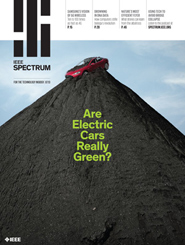
IEEE Spectrum July 2013 cover

IEEE Spectrum July 2013

We learn in “Unclean at Any Speed” that when the full life-cycle of electric cars is taken into account, they are not environmentally friendlier than gasoline-power cars.  Or more to the point of this posting, “electric cars don’t solve the automobile’s environmental problems.”  That’s not a good outcome, given the huge subsidies and acclamation given to all things green.  Bear in mind that this is coming from electrical engineers who would presumably favor electric solutions in a draw.

The article has this to say about the comprehensive report generated by the National Academies:

In a gut punch to electric-car advocates, it concluded that the vehicles’ lifetime health and environmental damages (excluding long-term climatic effects) are actually greater than those of gasoline-powered cars. Indeed, the study found that an electric car is likely worse than a car fueled exclusively by gasoline derived from Canadian tar sands!

When the National Academies researchers projected technology advancements and improvement to the U.S. electrical grid out to 2030, they still found no benefit to driving an electric vehicle.

The Spectrum article also cites a Norwegian study in the Journal of Industrial Ecology—electric vehicles consistently perform worse or on par with modern internal combustion engine vehicles, despite virtually zero direct emissions during operation”—and asks:

Do electric cars simply move pollution from upper-middle-class communities in Beverly Hills and Virginia Beach to poor communities in the backwaters of West Virginia and the nation’s industrial exurbs? Are electric cars a sleight of hand that allows peace of mind for those who are already comfortable at the expense of intensifying asthma, heart problems, and radiation risks among the poor and politically disconnected?

Folks, this is a real problem.  We praise and subsidize electric vehicles or hybrids because they’re supposed to be better for the environment, but they’re actually worse.  That means that 1) we aren’t solving the real problem, and 2) we are instead enabling misguided political agendas.  Now I’m not an environmentalist or ecologist, but I do care about this world, and I really would like to see better solutions offered.  Politics has been allowed to retain its stranglehold on the field by virtue of its power and money, and as long as that remains the case, we are unlikely to see real solutions.

What do we do about this problem?  To the politicians, I would say check your agendas at the door when you deal with science.  And try honesty for a change.  To those who truly love and wish to protect nature, purge the self-serving politicians from your midst, and reestablish the integrity of your cause.  If you can do that, then people like me will be able to listen to you and work with you because of the level of trust that we can develop, and we’ll actually be able to make progress based on objective credible good science.

What do you mean “when does life begin”?

There’s this really dumb question going around about when human life begins.  At conception?  At “viability”?  At birth?  I am no biologist or medical doctor, and my last biology class was sometime before 9th grade, but this is really pretty basic stuff.

Let’s take a step back and consider the reproductive process:  We begin with an egg cell and a sperm cell which fertilizes the egg.  Once the fertilized egg begins to divide, we call it an embryo until it reaches a particular prenatal developmental stage, and we begin calling it a fetus.  That fetus, at full term, is brought into the world through childbirth.  With me so far?

Here’s a question for my erudite opponents:  When did life ever end?  When was that developing human not alive?  The sperm cell was alive.  The egg cell was alive.  The embryo was alive.  The fetus was alive.  That newborn baby is certainly alive.  The answer is that life never ended, and that’s really easy to prove.

Let’s try a simple thought experiment.  This is what physicists do when faced with a problem that they don’t necessarily want to conduct in real life, to the relief of a great many superimposed felines.  If you spontaneously stop the life of the sperm or egg or embryo or fetus at any point in the process, can it ever be born as a living human?  Of course not.  That’s the whole point of abortion.

From the beginning of the sperm and egg cells until the time a child is born, there has always been at minimum one living cell with distinctly human DNA.  The natural progression is for that fertilized egg to develop into a grown human unless the mother miscarries—a tragedy—or has an abortion—a horror.

From the time of the first two human beings until each of us today, there has been continuous uninterrupted life:  An unbroken chain of human cellular life from me through the entirety of my ancestry back to the beginning of the human race.  If that life had ever ceased at any point, you wouldn’t be reading this.

Life is a precious gift, and in its weakest and most vulnerable times it needs love and protection.  To ask when it begins is misinformed or disingenuous or in some cases downright evil.

Isn’t that beautiful?

A team at the University of Maryland has created a very impressive robotic bird, realistic enough to get attacked by a hawk!  Why is it that some of the most beautiful things people design are inspired by nature?  Nicely done, Terps.